
Franklin Electronic Publishers
Heritage

Forty-five years.
Twelve dates.

The Franklin you know today — talking dictionaries, electronic Bibles, the Spelling Ace — came from a company that started out cloning Apple computers and ended up in front of the U.S. Court of Appeals.

  1. 1981

    Founded in Burlington County

    Three executives — Barry Borden, Russell Bower, and Joel Shusterman — incorporate Franklin Computer Corporation in southern New Jersey. The original mission is to build affordable Apple II-compatible desktop computers for schools and small businesses.

    Mount Holly Historic District, Burlington County, New Jersey — the region where Franklin Computer Corporation incorporated in 1981
  2. 1982

    The ACE 1000 ships

    Franklin's flagship Apple II Plus clone reaches retail. By 1983 the company employs more than 450 people and posts $71 million in annual sales — among the largest PC clone makers in the country.

    The Franklin ACE 1000 desktop computer, 1982
  3. 1983

    Apple v. Franklin reaches the Third Circuit

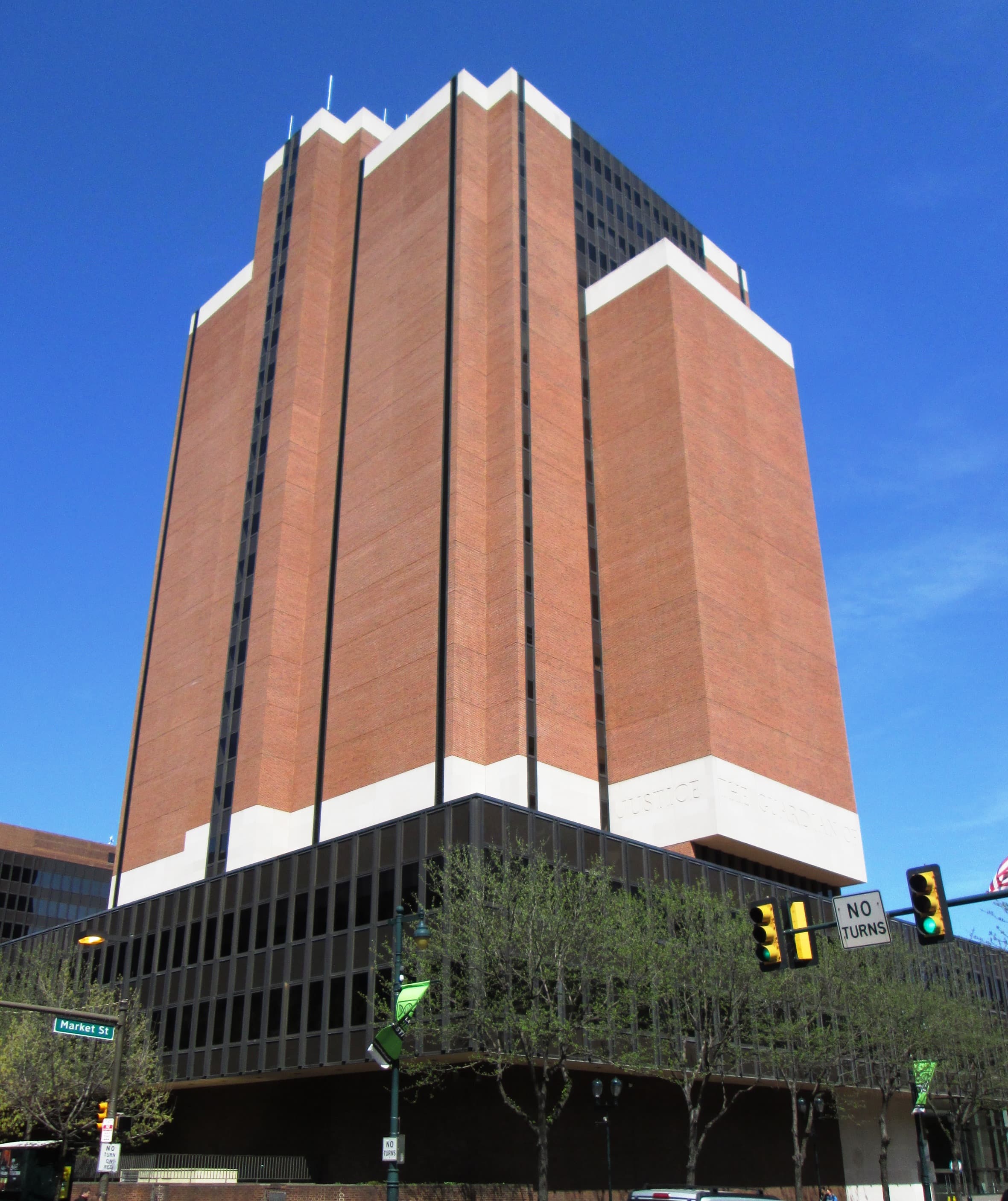
    The U.S. Court of Appeals for the Third Circuit holds that operating systems and BIOS code are protectable by copyright. The decision reshapes American software law and forces Franklin to leave the desktop market within five years.

    The James A. Byrne United States Courthouse in Philadelphia, seat of the U.S. Court of Appeals for the Third Circuit, where Apple v. Franklin was decided in 1983
  4. 1984

    Bankruptcy and rebuild

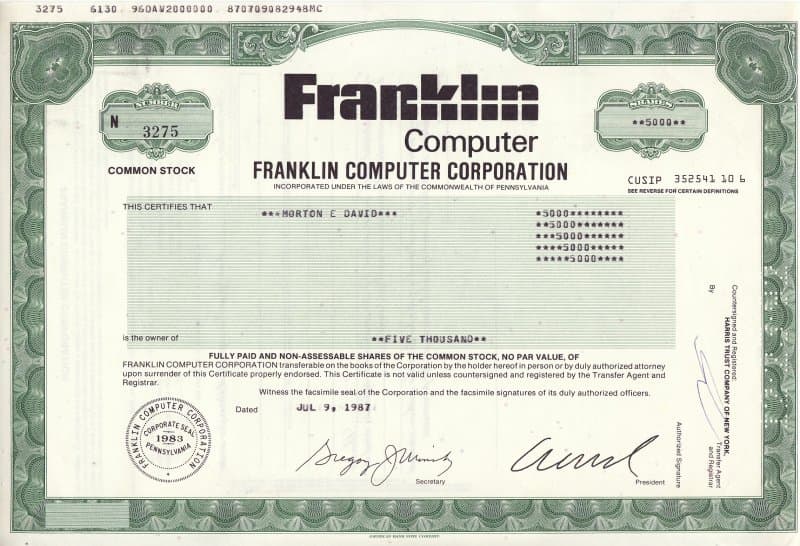
    Franklin files for Chapter 11. The company emerges under new leadership with a smaller workforce and a new direction: instead of clones, build the most useful handheld reference devices in the world.

    Franklin Computer Corporation common stock certificate, dated July 9, 1987 — issued under CEO Morton E. David, who steered the company out of bankruptcy
  5. 1986

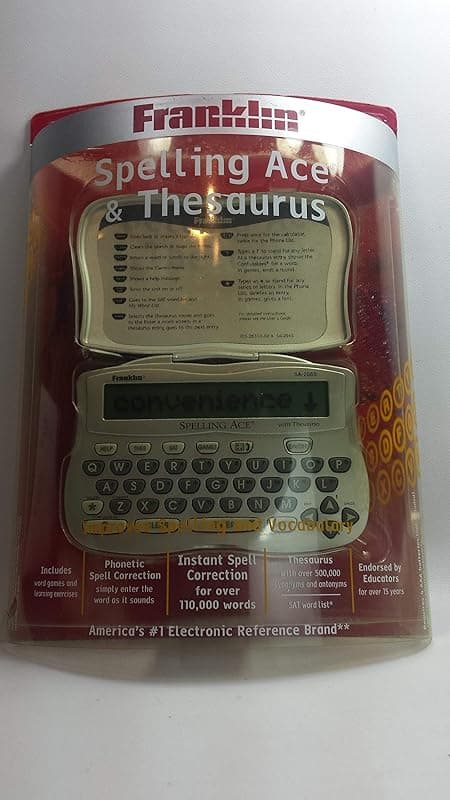
    Spelling Ace — the first handheld speller

    Franklin acquires Proximity Technology and ships the Spelling Ace, the first commercial handheld electronic spelling corrector. More than 800,000 units sell within two years. The company returns to profitability and never looks back.

    Modern Franklin Spelling Ace — same product family Franklin has shipped since 1986
    Modern model
  6. 1989

    The pocket Bible

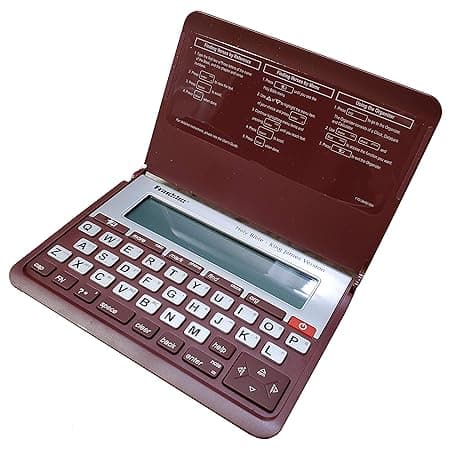
    Franklin releases handheld editions of the King James, New International, and Revised Standard versions of the Bible. Country musician Johnny Cash records nearly 400 passages from the King James edition for the line.

    Modern Franklin KJV electronic Bible — same product family launched in 1989
    Modern model
  7. 1990

    Renamed Franklin Electronic Publishers

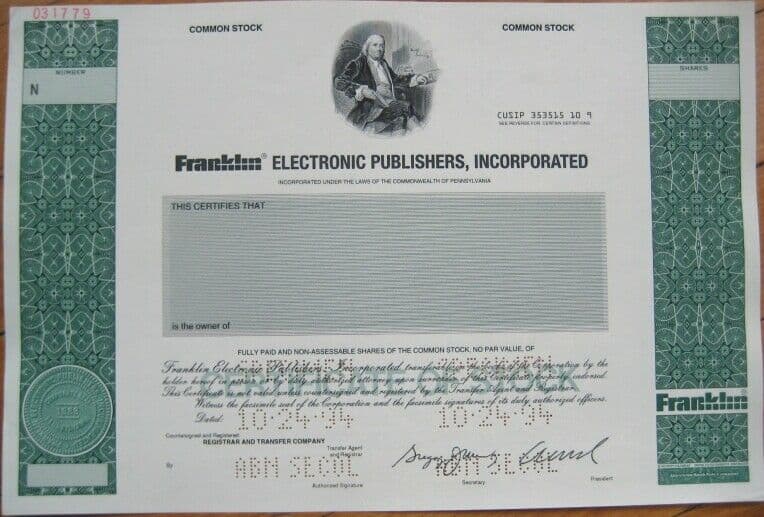
    The company drops "Computer Corporation" from its name to reflect a decade of work in handheld electronic publishing. Franklin Electronic Publishers, Inc. trades on the American Stock Exchange under the symbol FEP.

    Franklin Electronic Publishers, Incorporated common stock certificate — the rebranded company traded on the American Stock Exchange under the symbol FEP
  8. 1992

    Language Master

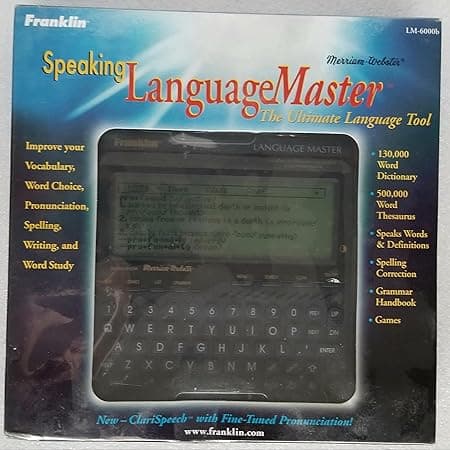
    Franklin ships the Language Master — the first talking handheld dictionary, spell checker, and grammar guide. The same year, the Digital Book System wins Popular Science's Best of What's New award for its swappable cartridge architecture.

    Modern Franklin Speaking Language Master — direct lineage to the 1992 original
    Modern model
  9. 1995

    Bookman

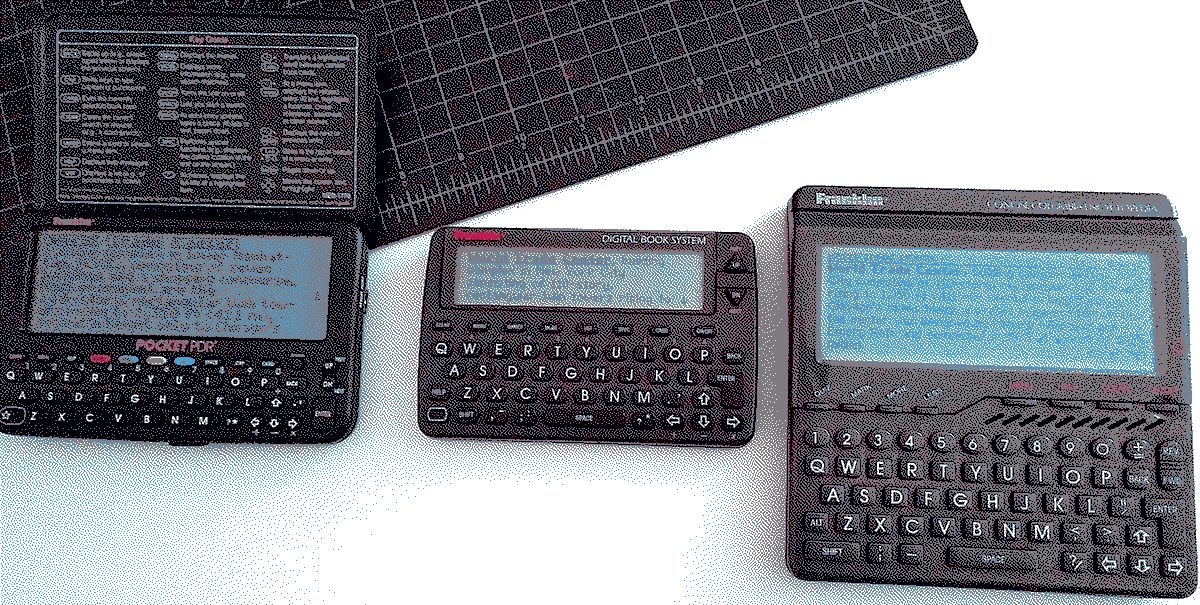
    The Bookman platform launches with pre-installed databases and an expansion-card slot for additional reference titles. By 1998 Franklin has sold more than fifteen million electronic books through forty-five thousand retail outlets worldwide.

    Three Franklin handheld reference devices spanning the Digital Book System / Bookman era — the cartridge-based platform that defined the company's mid-1990s line
  10. 1999

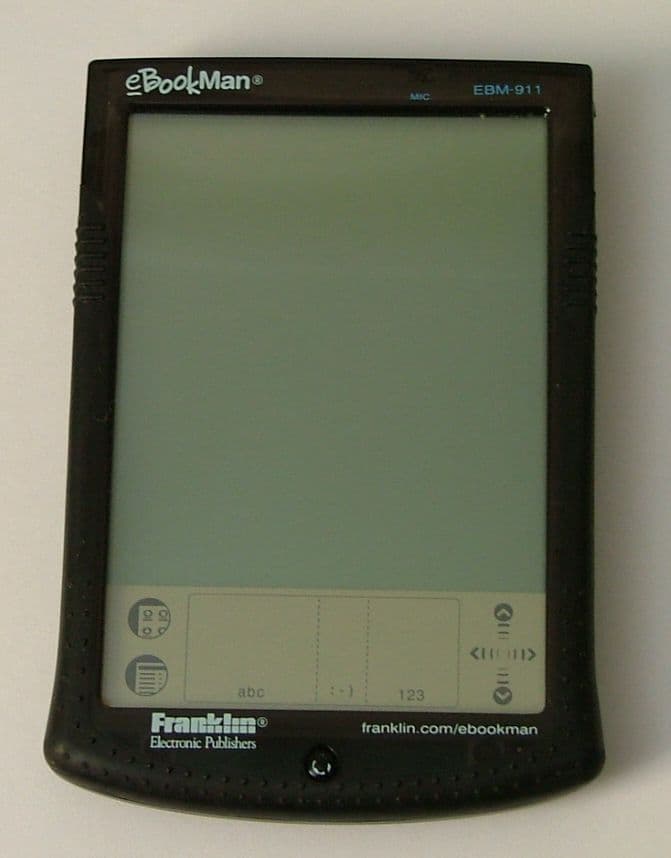
    eBookMan

    Franklin enters the dedicated eBook market with eBookMan — a handheld reader that plays MP3 audio and stores entire libraries on memory cards. It anticipates the form factor that consumer electronics would not catch up with for another decade.

    The Franklin eBookMan dedicated electronic-book reader, 1999
  11. 2009

    FEP Holding Company

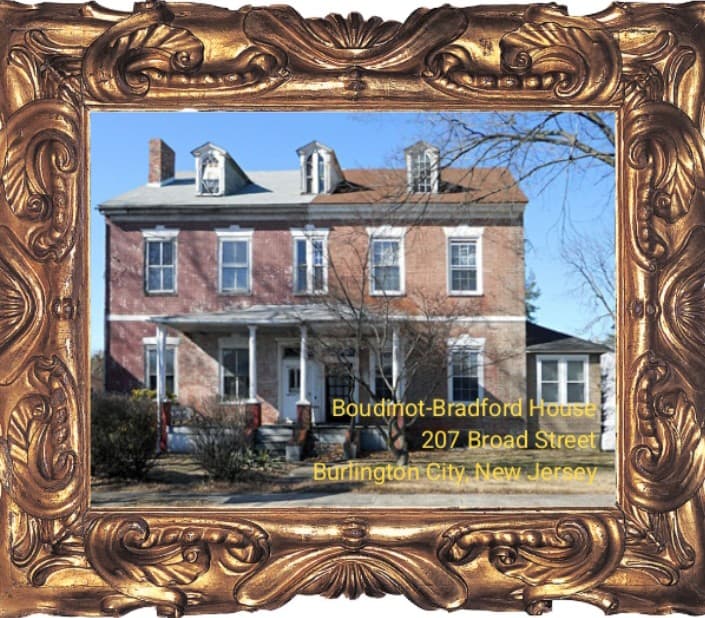
    Franklin Electronic Publishers, Inc. merges with Saunders Acquisition Corporation and becomes private as FEP Holding Company, LLC. The Burlington headquarters and the brand continue, focused on a tighter portfolio of handheld language and reference devices.

    The Boudinot-Bradford House on West Broad Street, Burlington, New Jersey — the city Franklin still calls home as FEP Holding Company
  12. 2026

    Forty-five years on

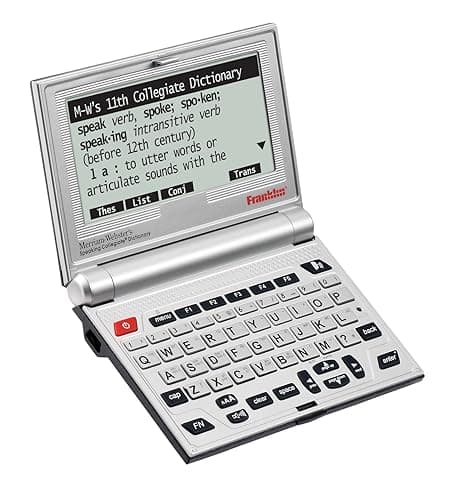
    Franklin remains the leading handheld talking-dictionary brand in the United States. Bilingual translators, spelling correctors, and the still-shipping Spelling Ace ground a catalog with deep roots in classroom and travel use.

    The Speaking Merriam-Webster Collegiate Dictionary SCD-2100 — Franklin's flagship reference device, currently shipping
Vintage Catalog

Devices that built the company.

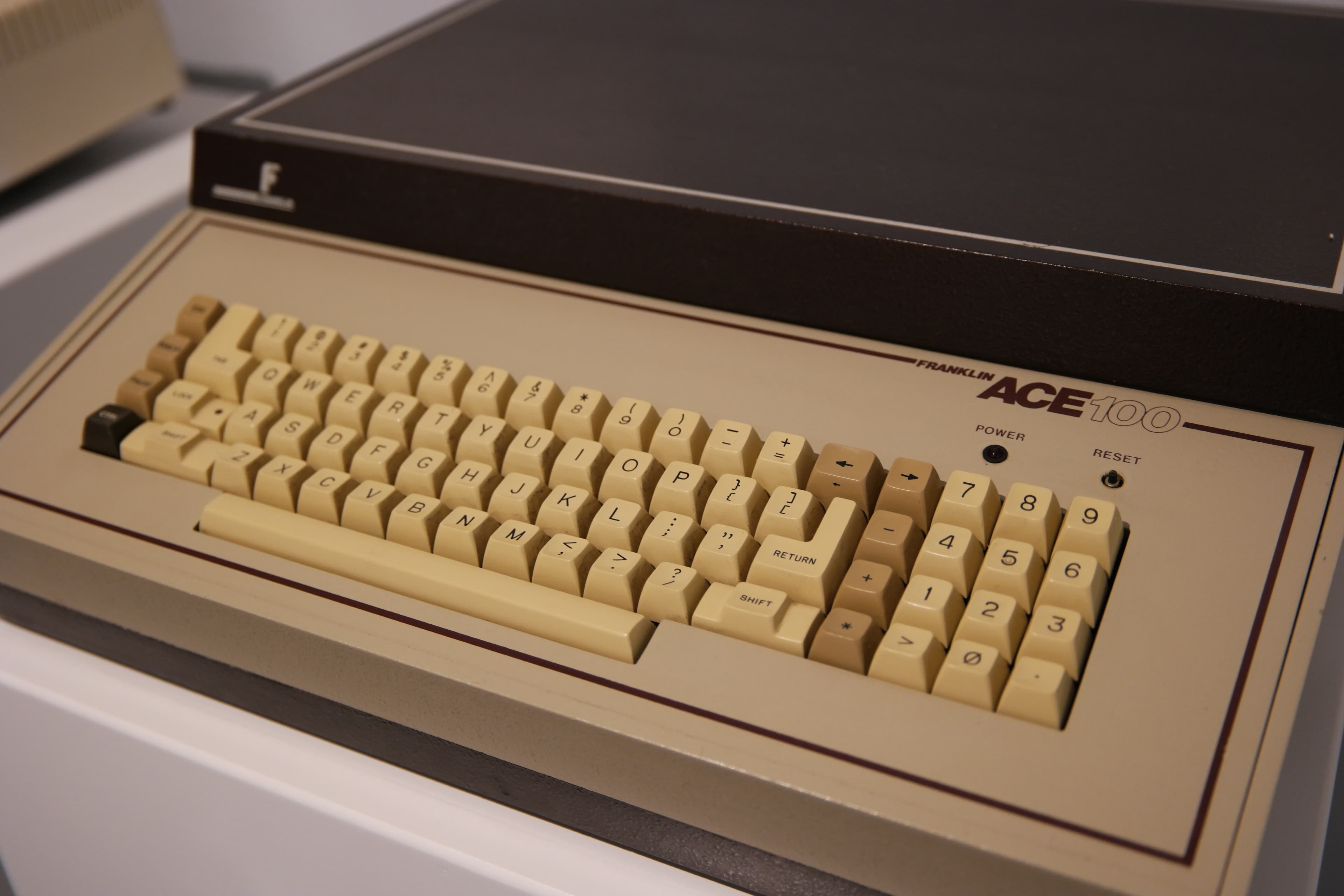
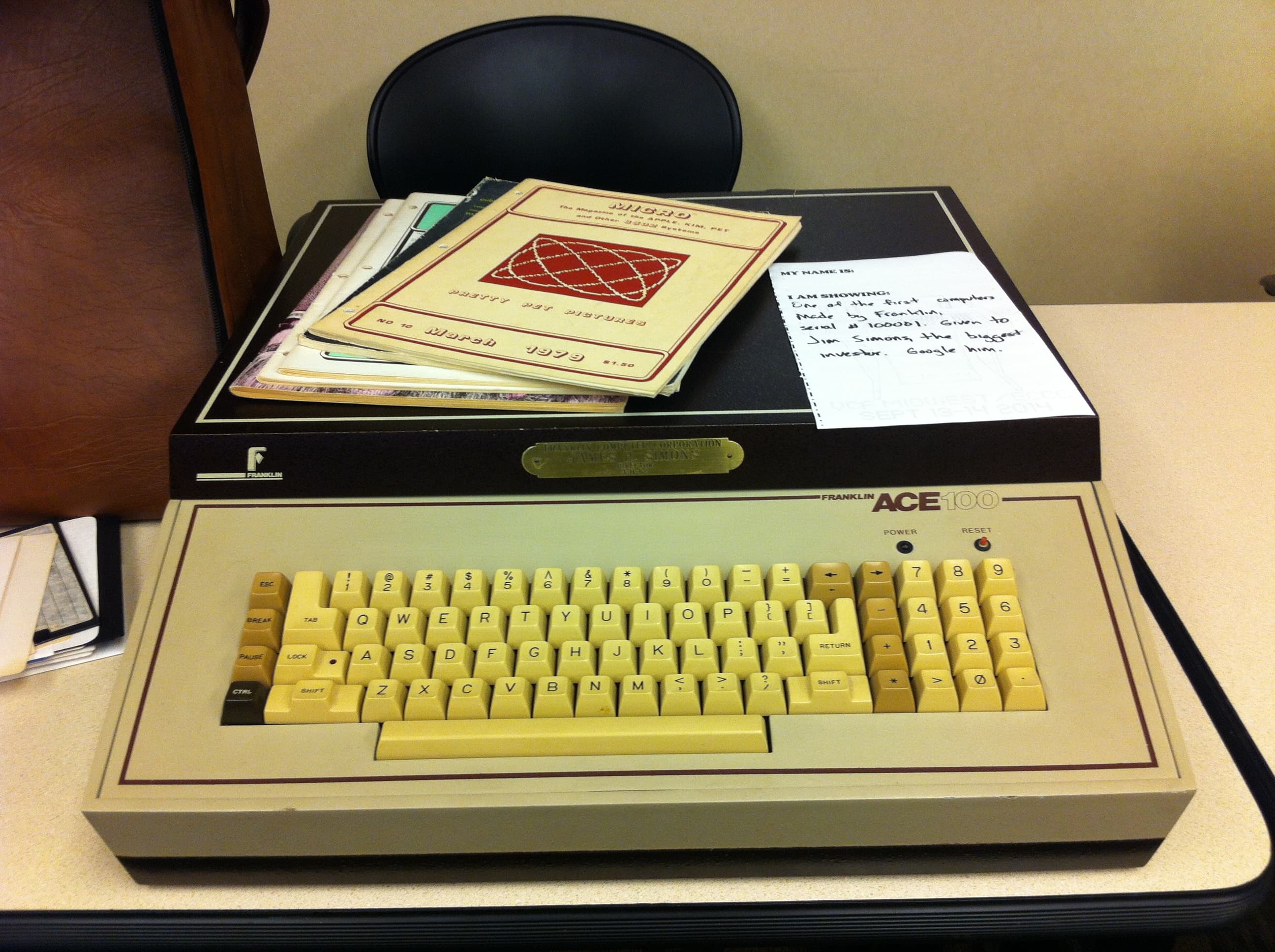
Franklin ACE 100 desktop computer, 1982
1982 · 1980s

Franklin ACE 100

Franklin's first product. An Apple II-compatible desktop built for schools and small offices that could not afford the original. The ACE 100 sat at the center of the Apple v. Franklin lawsuit that established software copyright in American law.

Franklin ACE 1000 Apple II-compatible desktop, 1982
1982 · 1980s

Franklin ACE 1000

The flagship Apple II Plus clone. Built around an Apple-compatible BIOS and motherboard, the ACE 1000 carried Franklin's brand into more than four hundred jobs and seventy million dollars in annual sales before the lawsuit changed the rules.

Modern Franklin Spelling Ace pictured. Direct lineage to the 1986 original.
Modern model
1986 · 1980s

Spelling Ace, Original

The first commercial handheld electronic spelling corrector. Type a misspelled word, get a list of likely corrections. Eight hundred thousand units sold in two years and the device that brought Franklin back from bankruptcy.

Modern Franklin KJV-570 pictured. Direct lineage to the 1989 KJV-450.
Modern model
1989 · 1980s

KJV-450 Pocket Bible

The first handheld electronic Bible. Full King James text with passage search and verse-of-the-day, voiced for the audio edition by Johnny Cash, who recorded nearly four hundred passages for Franklin.

Modern Franklin Speaking Language Master LM6000b pictured. Direct lineage to the 1992 original.
Modern model
1992 · 1990s

Language Master

Franklin's first talking handheld dictionary, spell checker, and grammar guide. The audio component changed how the line was used in classrooms and put Franklin reference devices in front of a generation of students.

Three Franklin handheld reference devices spanning the Digital Book System / Bookman era — the cartridge-based platform that defined the company's mid-1990s line
1995 · 1990s

Bookman

A handheld reference device with swappable cartridges. Buy the Bookman, then add the Merriam-Webster, the Physician's Desk Reference, the Bible, or any of more than two hundred titles. The architecture anticipated app stores by a decade.

Franklin eBookMan handheld electronic-book reader, 1999
1999 · 1990s

eBookMan

A dedicated handheld for reading entire books on a battery-friendly grayscale screen, with audio playback for spoken-word titles. Released a decade before mainstream consumer eReaders found the same form factor.